Understanding the Appeal of Custom Dining Tables
The allure of custom dining tables lies in their ability to transform any dining space into a true reflection of personal style and taste. Unlike mass-produced options, which offer limited sizing, materials, and finishes, custom tables present endless possibilities for personalization. This article delves into the significance of custom dining tables, emphasizing their role in enhancing homes and businesses alike. When exploring options, Custom dining table solutions provide unparalleled insights into how design can cater to specific needs and preferences.
The Importance of Personalization in Furniture Design
Personalization is more than just a trend; it’s a necessity for creating spaces that feel uniquely yours. A custom dining table allows homeowners to select size, shape, and materials that not only fit their aesthetic preferences but also complement the lifestyle they lead. Personal touches, like specific wood stains or unique leg designs, can elevate the dining experience, making every meal feel special.
Why Choose a Custom Dining Table for Your Home?
Choosing a custom dining table offers numerous advantages:
- Tailored Fit: Custom tables are built to the exact dimensions required, ensuring a perfect fit for your space.
- Unique Style: Homeowners can select from various designs, materials, and finishes that resonate with their artistic vision.
- Quality Craftsmanship: Custom tables are typically crafted from solid hardwoods, providing durability and longevity that mass-produced tables often lack.
- Emotional Value: A custom piece can become a family heirloom, imbued with personal memories.
Exploring the Benefits of Solid Hardwood Materials
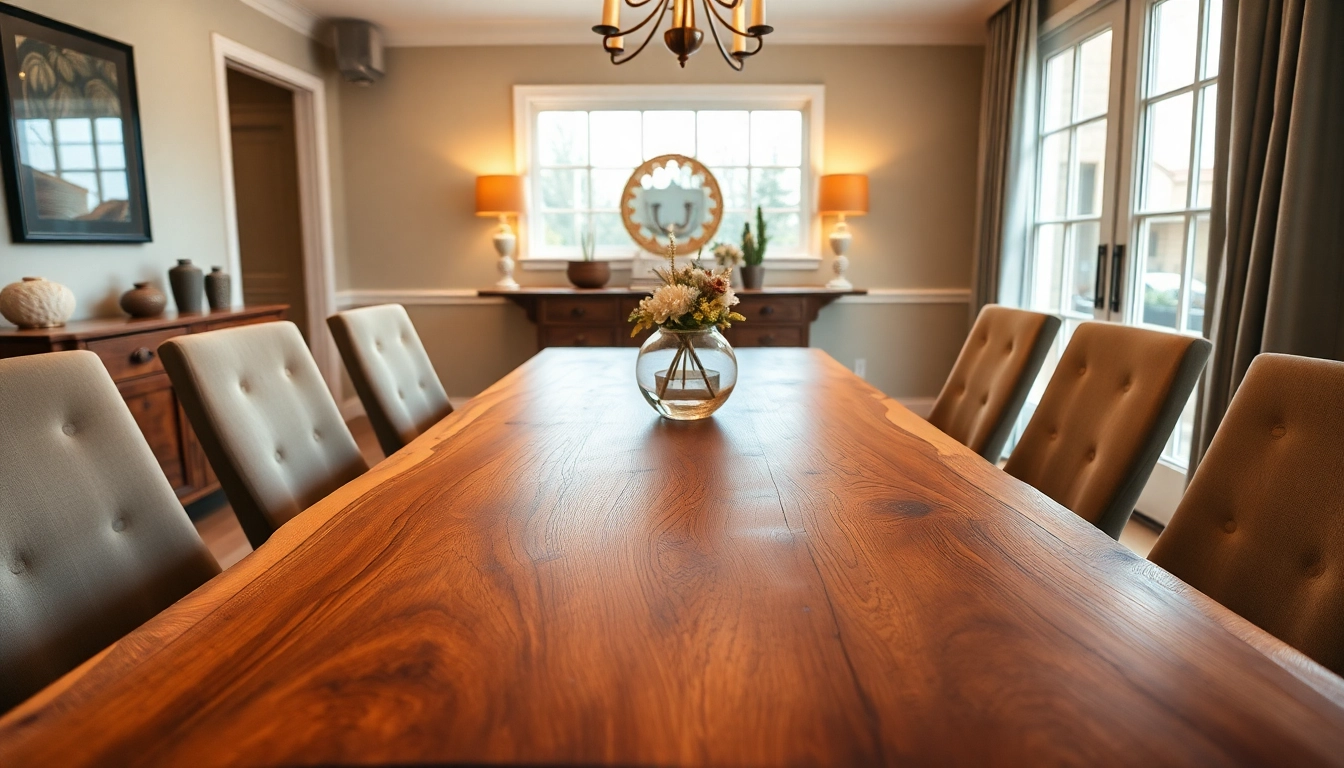
Solid hardwoods such as oak, walnut, maple, and hickory are ideal choices for crafting durable, beautiful tables. These materials boast natural grains and textures, enhancing the beauty of each custom dining table. Moreover, solid hardwoods are known for their longevity and resistance to wear, making them the perfect investment for both residential and commercial settings.
Key Features to Consider in Custom Dining Table Design
When designing a custom dining table, several key features are paramount to achieving the perfect balance of functionality and aesthetics. These elements not only affect the table’s overall look but also influence how it integrates into your space.
Choosing the Right Dimensions for Your Space
Correct sizing is critical in dining table design. Considerations include:
- Length and Width: Tables should accommodate the number of diners comfortably, allowing for adequate space between each person.
- Height: Standard dining tables range from 28 to 30 inches high, but custom options can cater to unique seating arrangements and preferences.
- Shape: Rectangular, square, round, or oval tables can influence the flow of a room. Round tables promote conversation, while rectangular tables fit well in narrow dining areas.
Material Options: Wood Types and Finishes Explained
The choice of wood and finish can dramatically affect a table’s character. Options include:
- Walnut: Known for its rich color and grain patterns, ideal for modern and traditional designs.
- Maple: Offers a lighter tone and smooth finish, great for contemporary aesthetics.
- Hickory: Renowned for its strength and unique grain, perfect for rustic styles.
- White Oak: Provides a timeless appeal with excellent durability.
Innovative Customization: Incorporating Unique Features
Beyond standard options, innovative customizations can enhance functionality. Features such as:
- Hidden Power Ports: Ideal for tech-friendly dining experiences, allowing connections for laptops or devices without cluttering the table.
- Adjustable Heights: Dining tables that can convert to higher bar heights or lower coffee table heights offer versatility for different events.
- Integrated Storage: Options that include built-in drawers or shelving for storing dining essentials.
Enhancing Your Dining Experience with Custom Solutions
Custom dining tables don’t only serve as furniture; they enhance the overall dining experience by creating harmony between style, comfort, and functionality.
Creating a Cohesive Look: Matching Dining Chairs and Decor
To achieve a unified aesthetic, it’s crucial to select dining chairs and décor that complement your custom table. Coordinating styles, colors, and materials can transform your dining area into a seamless extension of your overall home design. Consider the following:
- Chair Design: Choose chairs that harmonize with the table’s style—modern chairs with a contemporary table or vintage pieces with rustic wood.
- Color Palette: Keep a consistent color scheme between the table, chairs, and surrounding decor to create a cohesive look.
- Textiles: Table runners, placemats, and chair cushions can add texture and color, enhancing the overall dining atmosphere.
Smart Integration: Hidden Power Ports and Wire Management
In today’s connected world, integrating technology into furniture design is increasingly important. Custom dining tables can be enhanced with:
- Power Outlets: Built into the table for easy access to charging devices during meals or meetings.
- Wireless Charging Stations: Integrated solutions that offer convenience without visible cords.
- Concealed Storage for Cables: Keeping your dining space tidy by managing cords effectively.
Trends in Multi-functional Dining Spaces
The modern home often embraces multifunctionality. Custom dining tables can cater to various uses beyond dining, including:
- Workspaces: Tables that double as home offices or study areas.
- Entertainment Spaces: Designing tables that can accommodate larger gatherings or serve as buffet stations during parties.
- Creative Projects: Larger tabletop areas that can be used for crafts, art, or family activities.
Comparing Custom Dining Tables with Mass-produced Options
When considering a dining table, it’s essential to weigh the benefits of custom options against mass-produced varieties. This comparison can reveal the value of investing in customized pieces.
Quality vs. Affordability: What’s the Real Difference?
Mass-produced tables may come at a lower price point, but they often lack the quality and durability that custom options offer. Custom dining tables are typically made from solid hardwoods, while mass-produced options may utilize veneers or lower-quality materials that compromise longevity.
Long-term Value: Why Custom Tables Are Worth the Investment
Investing in a custom dining table can yield significant long-term value:
- Durability: High-quality materials and craftsmanship mean custom tables can last generations, often becoming family heirlooms.
- Unique Character: Custom options ensure you receive a piece that stands out, while mass-produced tables may blend into the crowd.
- Satisfaction and Personalization: The joy of owning a piece tailored to your preferences can enhance your dining experience for years to come.
Real Life Examples of Custom vs. Off-the-Shelf Solutions
Many families have shared stories about how custom dining tables have transformed their homes. For example, a family that opted for a custom table with integrated storage found that it not only enhanced their dining experience but also provided a practical solution for organizing their dining area. In contrast, a friend who purchased a mass-produced table often regretted the decision, as it lacked the character and durability they desired.
The Future of Custom Dining Tables: Trends for 2026 and Beyond
As we look ahead, several trends are emerging in the world of custom furniture that suggest exciting developments for custom dining tables.
Eco-friendly Materials and Sustainable Practices
Today’s consumers are increasingly aware of environmental sustainability. More custom furniture manufacturers are incorporating eco-friendly materials and practices into their production processes. This means using sustainably harvested woods, non-toxic finishes, and energy-efficient manufacturing methods.
Technology Integration in Furniture Design
The future of furniture design will likely see an expansion in technology integration. Expect to see:
- Smart Furniture: Tables with built-in wireless charging, LED lighting, and adjustable heights.
- Augmented Reality (AR): Tools that allow customers to visualize how a custom dining table will look in their space before making a purchase.
- Enhanced Connectivity: Features that simplify charging and connectivity for multiple devices during meals.
Predictions for Custom Furniture Trends in the Next Decade
The next decade promises innovative trends in custom dining furniture:
- Increased Demand for Customization: As consumers seek unique experiences, the demand for customizable furniture options will grow.
- Focus on Versatility: Multi-functional designs that can adapt to various uses will be paramount.
- Enhanced User Experience: Furniture that seamlessly integrates into daily life, enhancing convenience without sacrificing style.