
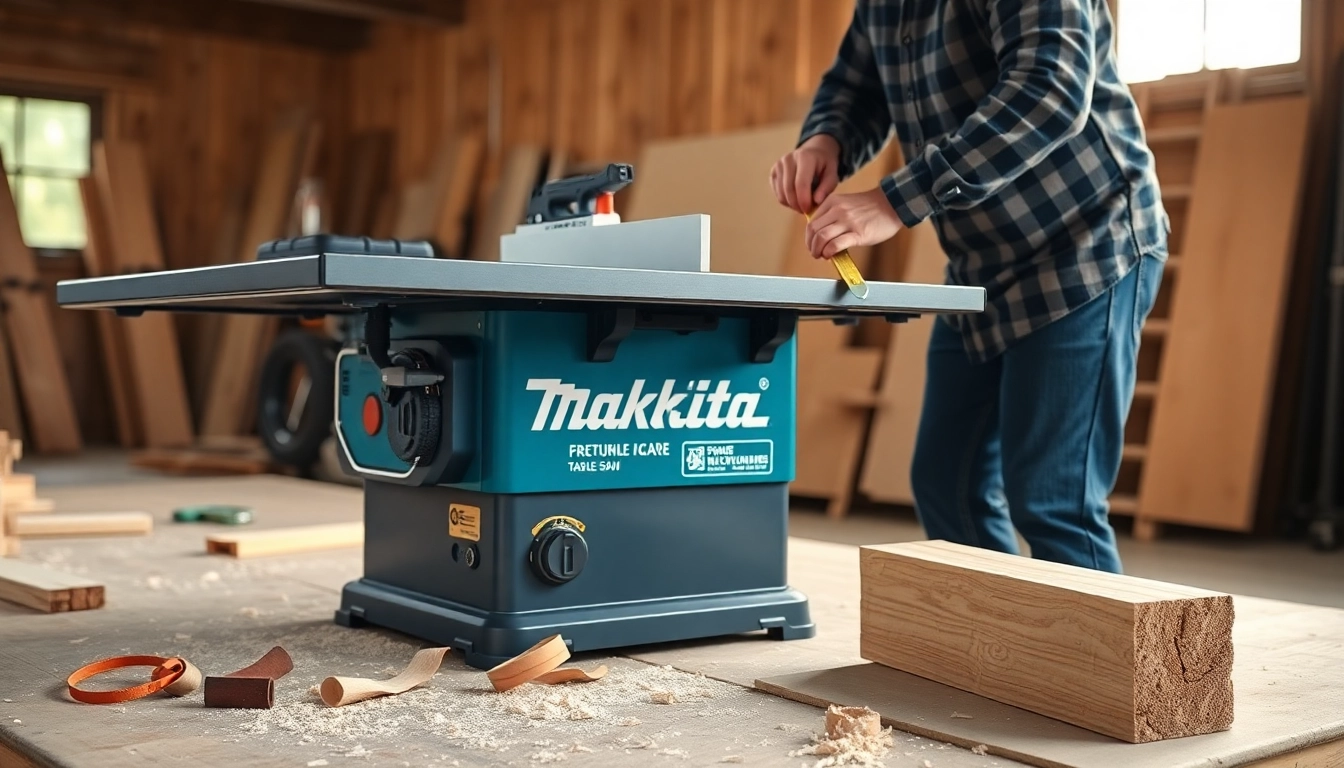
Understanding the Makita Table Saw
What is a Makita Table Saw?
The makita table saw is a powerful and efficient tool designed for precise cutting in woodworking and construction projects. Known for its durability and performance, a Makita table saw offers woodworkers and contractors an essential solution for making accurate cuts in various materials. Available in a range of models, these table saws cater to both professional and hobbyist users, ensuring that everyone can find the right fit for their specific needs.
Key Features and Specifications
Makita table saws are equipped with a variety of features that enhance usability and performance. Significant specifications include:
- Powerful Motors: Most Makita table saws are equipped with high-torque motors ranging from 15 to 15 amp, enabling them to handle heavier cuts and more challenging materials efficiently.
- Blade Size: They typically support popular blade sizes, primarily 10 inches, which is optimal for making rip cuts and crosscuts.
- Portable Options: Many models are designed for portability, featuring lightweight construction and foldable stands, making them ideal for job sites and home workshops alike.
- Precision Features: Options such as a rack and pinion adjustment system, laser guide, and easy-to-read scales enhance accuracy, ensuring that users can achieve precise cuts consistently.
Benefits of Using a Makita Table Saw
The benefits of using a Makita table saw extend beyond simple cutting tasks. Here are a few key advantages:
- Enhanced Accuracy: With features designed for precise measurements, Makita table saws significantly improve cutting accuracy, making them suitable for detailed projects.
- Durability: Built with robust materials and engineering, these saws are designed to withstand the rigors of frequent use.
- Safety Features: Integrated safety features, such as blade guards and electric brake systems, help prevent accidents during operation.
- Versatility: Suitable for various applications, from rip cuts to crosscuts in hardwood, plywood, and other materials.
Choosing the Right Makita Table Saw for Your Needs
Different Types of Makita Table Saws
When selecting a Makita table saw, understanding the different types available can help you make an informed decision:
- Contractor Table Saws: These are portable, generally feature a robust stand, and are designed for job site use while still providing adequate performance for home projects.
- Bench Saws: Compact in size, these saws suit smaller workshops or hobbyist settings where space may be an issue.
- Cabinet Table Saws: For professional contractors, cabinet table saws provide superior stability and power, making them ideal for continuous use in high-demand environments.
Factors to Consider When Buying
When choosing the right Makita table saw, several factors must be considered to ensure it meets your requirements:
- Horsepower: Higher horsepower means better performance, especially when cutting through tougher materials.
- Weight and Portability: If you frequently move your saw, consider models that are lightweight yet stable.
- Cutting Depth and Bevel Capability: Check how deep and at what angles the saw can make cuts, as this impacts your versatility and capability for different projects.
- Budget: Determine your budget range as Makita offers a variety of price points, with features corresponding to each.
Top Makita Table Saw Models in 2026
As of 2026, several Makita table saw models are garnering attention in the market for their reliability and features:
- Makita 2705X1: Known for its powerful 15-amp motor, this model is perfect for contractors and includes a laser guide for precision.
- Makita 3640: A portable option that combines lightweight design with impressive performance, making it ideal for small jobs without sacrificing capability.
- Makita 2712: This saw is a contractor-grade model featuring a larger table surface and an extended rip capacity, making it perfect for larger projects or job site demands.
Maintenance and Care for Your Makita Table Saw
Routine Maintenance Practices
To ensure optimal performance and longevity of your Makita table saw, follow these routine maintenance practices:
- Cleaning: Regularly clean sawdust and debris from the table, under the guard, and around the motor. This will prevent overheating and enhance visibility while working.
- Blade Inspection: Regularly check your blades for wear and tear. Replacing dull or damaged blades is crucial for safety and cutting efficiency.
- Lubrication: Periodically lubricate moving parts according to the manufacturer’s recommendations to ensure smooth operation.
Common Issues and Troubleshooting
Understanding common issues with table saws can help you troubleshoot effectively:
- Inconsistent Cuts: This often results from a dull blade or incorrect alignment. Check and replace the blade or realign the settings as necessary.
- Electrical Problems: If the saw doesn’t start, inspect the power cord for damage or verify that the outlet is functioning.
- Vibration Issues: Excessive vibration can indicate a problem with the saw’s balancing or blades.
When to Seek Professional Help
It’s essential to recognize when it may be time to seek professional assistance. If you encounter persistent issues despite troubleshooting, or if there are mechanical problems that you cannot resolve, contacting a professional service is advisable. It is especially critical to seek help for electrical issues or significant mechanical malfunctions as they can pose safety risks.
Safety Tips for Using a Makita Table Saw
Essential Safety Gear
Safety should always be a priority when operating any power tool, and using a Makita table saw is no exception. Essential safety gear includes:
- Safety Glasses: Protect your eyes from flying debris and dust.
- Hearing Protection: Prolonged exposure to the noise of the table saw can lead to hearing damage.
- Dust Masks: Limit inhalation of sawdust and other airborne particles by wearing a dust mask.
- Work Gloves: Ensure you wear gloves that provide grip without sacrificing control.
Best Practices for Safe Operation
To operate your Makita table saw safely, observe the following best practices:
- Read the Manual: Always familiarize yourself with the user manual and follow manufacturer instructions for setup and operation.
- Keep Your Hands Clear: Always use push sticks or other tools to guide material through the blade, keeping your hands a safe distance away.
- Secure Your Workpiece: Utilize clamps and a proper setup to stabilize the material before cutting.
Understanding Common Hazards
Being aware of potential hazards can help you use your Makita table saw safely. Common hazards include:
- Kickback: This occurs when a workpiece is caught by the blade and thrown back towards the operator. Understanding how to prevent kickback is crucial.
- Blade Contact: Always remain vigilant to avoid accidental contact with the blade, which can result in severe injury.
- Electric Shock: Be cautious around power cords, ensuring they are in good condition and away from the cutting area.
Maximizing Performance with Your Makita Table Saw
Techniques for Precision Cutting
Maximizing the performance of your Makita table saw involves utilizing techniques that ensure precision in every cut:
- Measure Twice: Always measure and mark your cuts beforehand to enhance accuracy.
- Utilize a Fence: Use the fence for straight cuts and adjustments to maintain accuracy throughout your work.
- Practice Steady Hands: Maintain a steady hand and rhythm when moving the workpiece, as any sudden movements can lead to inaccuracies.
Upgrades and Accessories to Consider
Enhance your table saw’s capabilities with various upgrades and accessories. Consider:
- Aftermarket Blades: High-quality blades tailored for specific cuts (e.g., fine finish or ripping) can significantly improve performance.
- Digital Measuring Tools: Digital gauges can offer precise measurements, improving accuracy.
- Extensions and Outfeed Tables: Additional support can enhance stability during large cuts.
Measuring and Marking Techniques
Employing effective measuring and marking techniques is crucial for obtaining consistent results:
- Use a Measuring Tape: Always use a reliable measuring tape, and make sure to mark with a pencil or marking knife for accuracy.
- Square Cuts: Utilize a carpenter’s square to ensure your cuts are square and true.
- Mark the Cut Line Clearly: A visible, clear line will help you adhere to your measurement accurately.
By integrating the above strategies and tips, you’ll not only enhance your experience with your Makita table saw, but also achieve superior results in all your woodworking projects. Invest time in learning and applying these techniques to maximize the efficiency and capabilities of this powerful tool. For more high-quality tools and accessories, you can visit Mistrer Worker.